
What Is DALI Lighting and How Does It Link to Tuneable Wellness Lighting?
In our previous blog, we discussed circadian rhythm, sleep patterns, and the impact of blue light, lighting having a profound effect on how we feel, focus, and rest. But to deliver truly effective tuneable, human-centric lighting, the control infrastructure behind the scenes is just as important as the light fittings themselves.
This is where DALI lighting control comes in.
What Is DALI Lighting?
DALI (Digital Addressable Lighting Interface) is an international standard (IEC 62386) for digital lighting control. Unlike traditional lighting circuits that switch or dim entire zones together, DALI allows individual control of each light fitting on a shared data line.
In practical terms, this means:
- Each fitting of light within a circuit can be individually addressed
- Brightness levels are digitally controlled with high precision
- Lighting scenes can be recalled consistently and reliably
- Changes can be made through software, not rewiring
DALI has become the backbone of modern architectural and commercial lighting — and increasingly, high-end residential projects.

Why DALI Matters for Tuneable & Wellness Lighting
Tuneable white lighting relies on precise, repeatable control of colour temperature and intensity throughout the day. Without a digital protocol like DALI, this level of accuracy simply isn’t possible.
When using DALI, a lighting system can shift from cool, blue-enriched light in the morning, gradually warm throughout the afternoon, transition to soft, amber tones in the evening and maintain consistent colour accuracy across all fittings.
This aligns directly with circadian-friendly lighting strategies, supporting alertness during the day and promoting melatonin production at night — as discussed in our blue-light article.
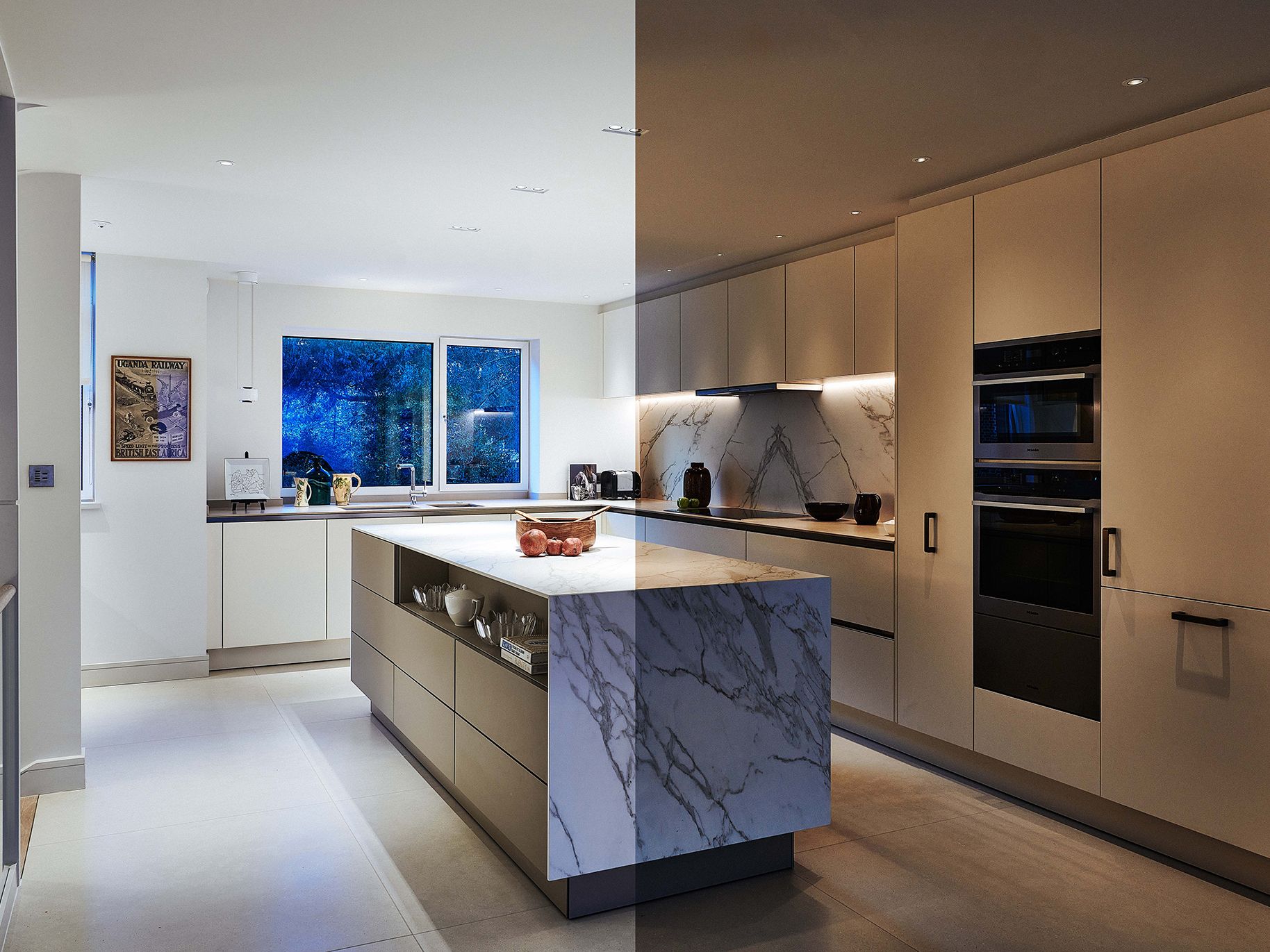
DALI + Tuneable Light fittings: A Smarter Combination
When DALI is paired with high-quality tuneable light fixtures (such as Orluna’s architectural lighting ranges), the system can finely manage:
- Dual-channel LEDs (warm and cool)
- Smooth transitions without flicker
- Exact colour temperature targets (e.g. 2700K → 5000K)
- Zoned or whole-house lighting behaviours
Because DALI is a digital protocol, these changes are measured and repeatable, rather than approximate — a critical factor in wellness-focused lighting design.
Integrating DALI into Smart Homes
In residential projects, DALI is often integrated into a wider smart home ecosystem. This allows tuneable lighting to work seamlessly alongside:
- Time-based schedules
- Daylight sensors
- Scene-based control (Morning, Focus, Relax, Evening)
- Centralised systems such as Control4 or Lutron (via gateways)
The result is lighting that adapts automatically to the occupants, rather than requiring constant manual adjustment.
Conclusion
If circadian-aware, tuneable lighting is the what, then DALI is the how.
It provides the precision, stability, and flexibility required to deliver meaningful wellness lighting — ensuring that colour temperature, brightness, and timing work together to support natural sleep-wake cycles.
If you’re designing a home with wellbeing in mind, DALI isn’t just a technical option — it’s a foundational element.
We can supply not only the lighting control system for this, but we are also partnered with Orluna to also provide the fixtures needed! So get in contact with us for further discussion and quotation.